
 01
Prep
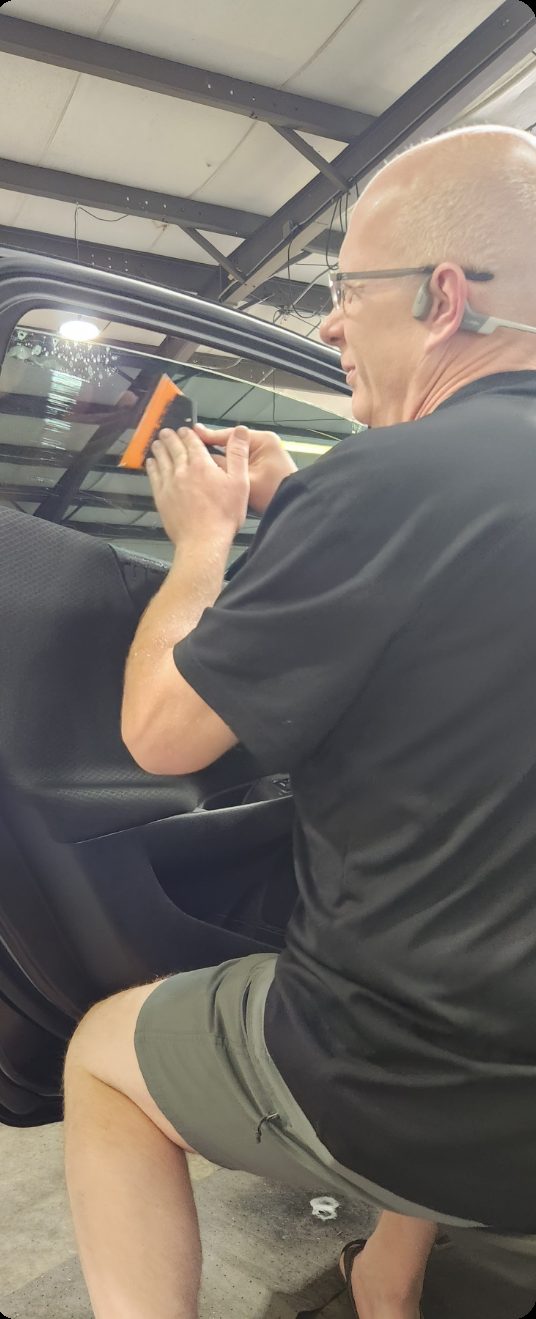
The glass is cleaned and the surface prepared so the film lays flat and bonds clean.
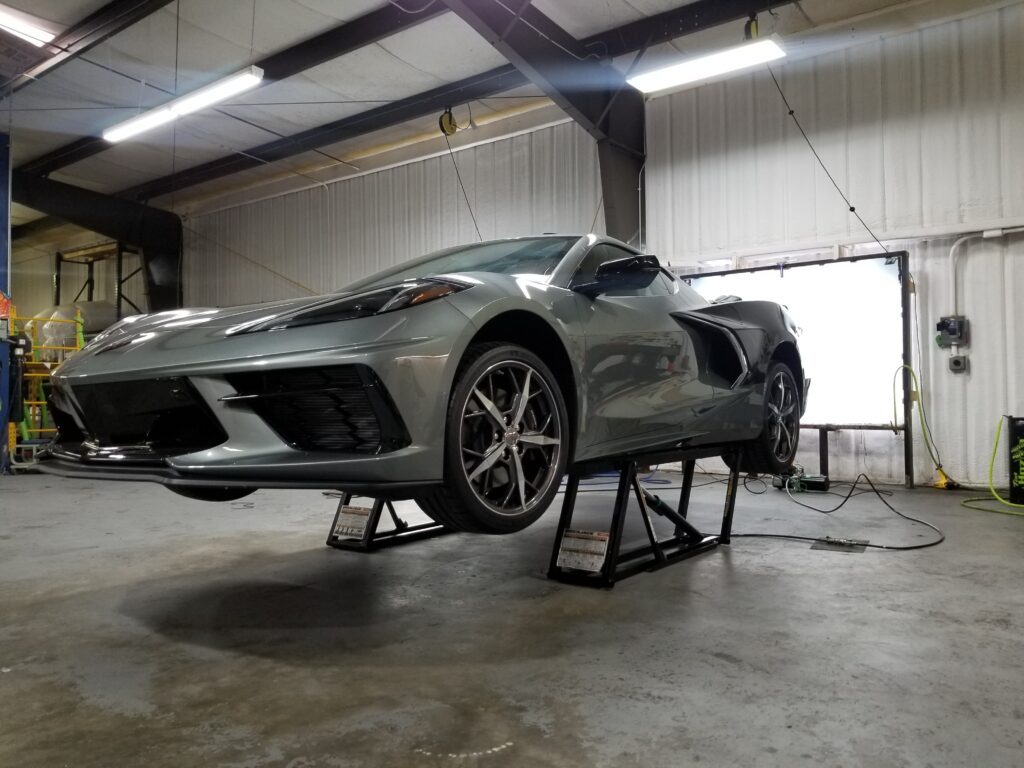
Cars, homes, offices — and the training shop where tinters learn the trade. Owner Jeff Welch and his crew have been tinting in Forsyth since 1991.
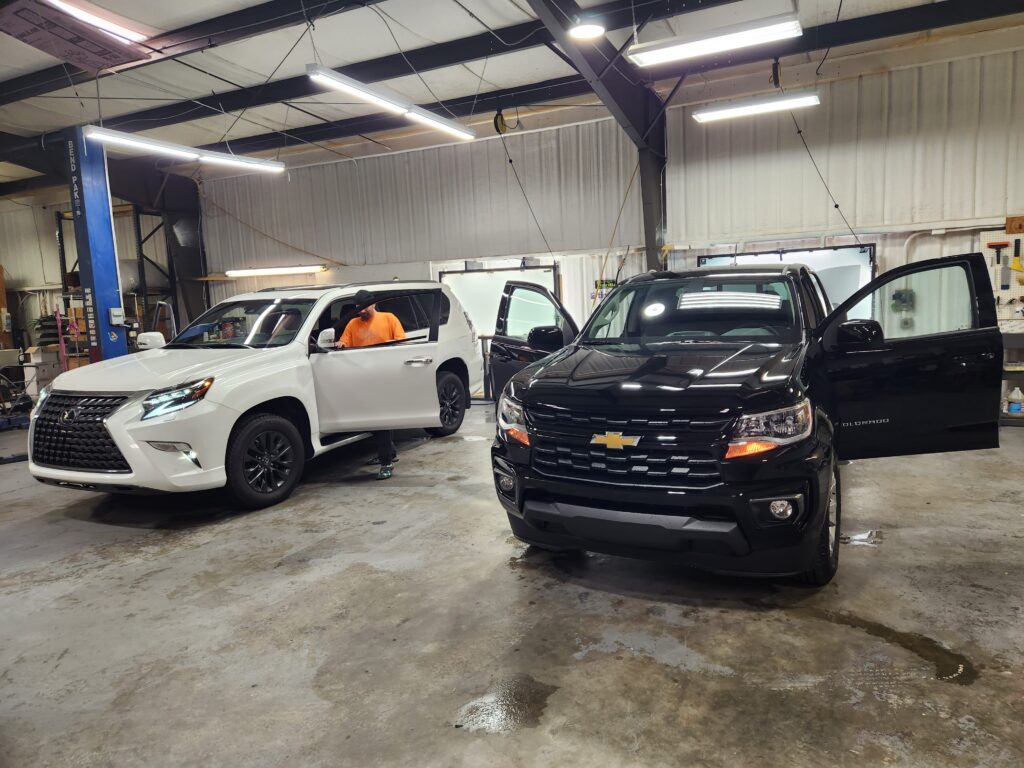
Every shade installed right here in Forsyth. These are the shades we work in — 35% is the sweet spot most drivers land on.
From first call to final check — how a tint job goes on at Georgia Window Tint.
01The glass is cleaned and the surface prepared so the film lays flat and bonds clean.
 02
Film is cut to your vehicle’s exact glass — no gaps, no guesswork.
 03
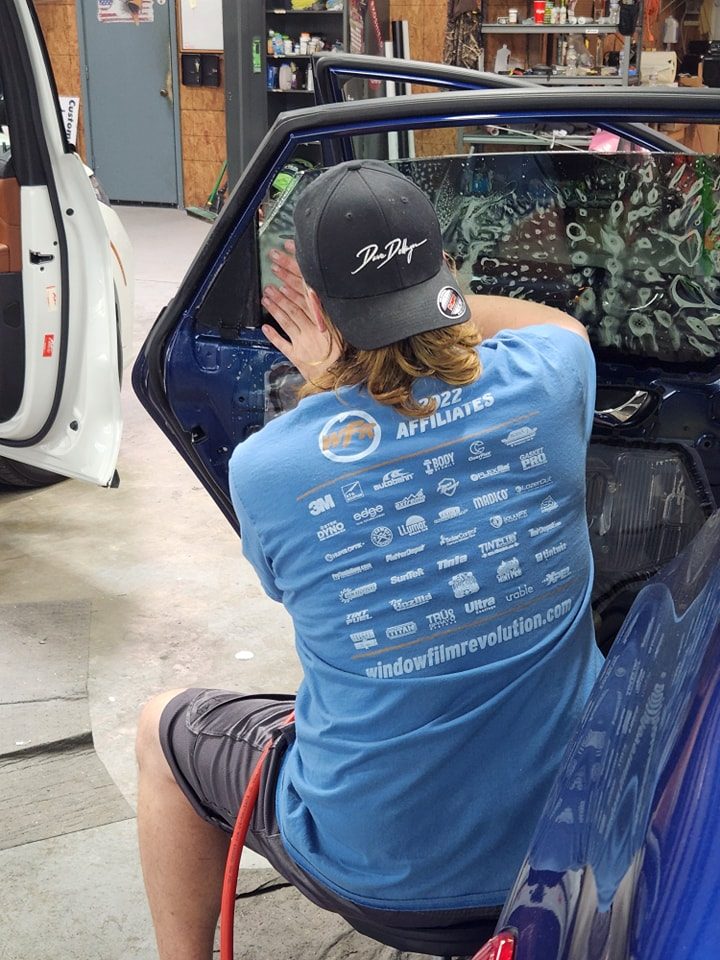
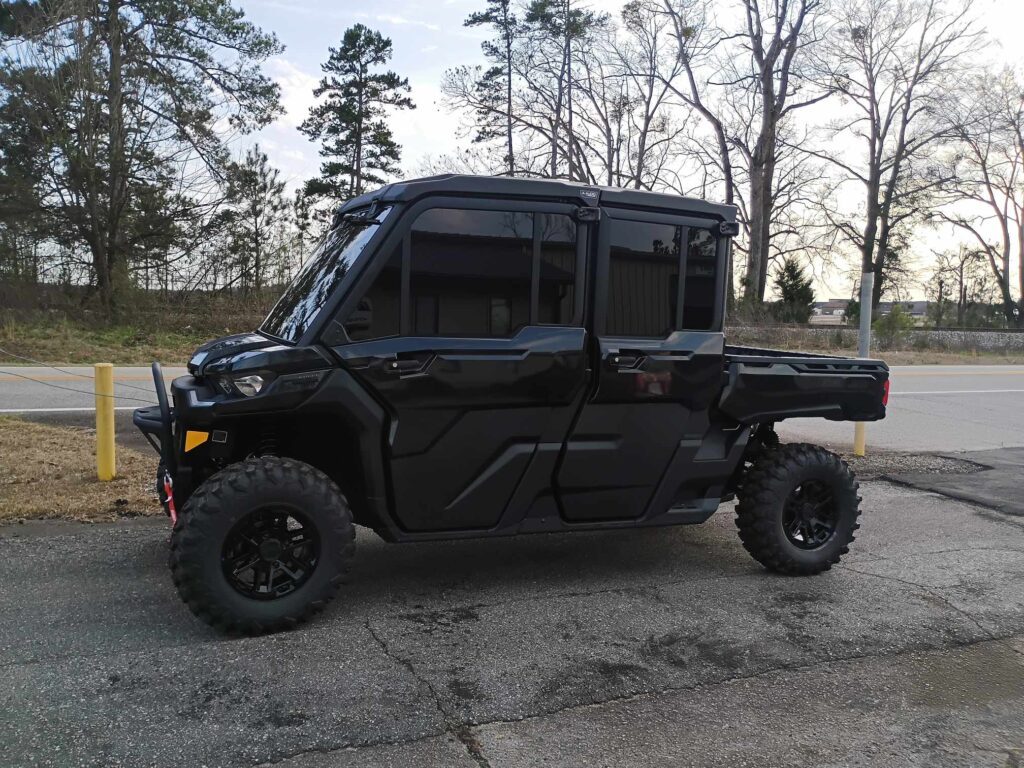
The film goes on the inside of the glass, squeegeed smooth and tucked to the edges.
 04
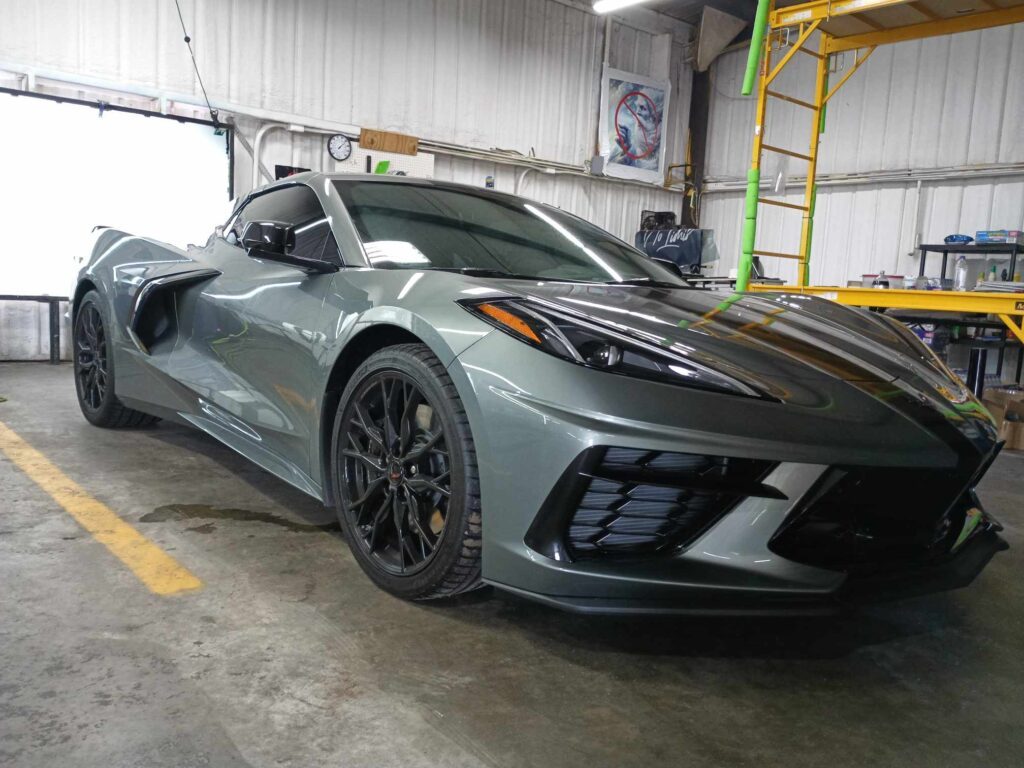
The install is checked edge to edge before you leave, with aftercare guidance for the cure.
5.0 stars across 107 Google reviews.
“What an awesome experience! Good prices, efficient operations, and great customer service. 100% recommend!”
“Great work, great staff, good quick service. Should you wait while getting tinted, the receptionist has good singing voive”
“Just amazing people, and super helpful. Their work is amazing and looks absolutely amazing.”
“What amazing people! I am exceptionally pleased with the service I received. For automotive, commercial or residential, they do quality work. Highly recommended!”
“Great job! Jeff and the staff provided great and professional service. Completed the project quickly and efficiently with great customer service.”
Tell us what you're tinting — car, home, or office — and we'll take it from there. Or call (478) 954-2379.
Thanks — your request is in. Jeff and the crew at Georgia Window Tint will get back to you shortly.
Need it faster? Call (478) 954-2379.
Owner Jeff Welch has installed window film full-time since 1991 — over three decades at the glass. In 1993, tired of sprayer bottles failing him mid-job, he rebuilt one with a Goodyear hose, crimped brass connections and a brass nozzle; that assembly, in full-time service since late 1994, became Tint Hozilla, the keg sprayer brand he launched in late 2017 and still runs from this same Forsyth shop. Georgia Window Tint is where Jeff and his team put that lifetime of craft to work for Monroe County — automotive, home and commercial tint, vehicle wraps and paint protection film, backed by a lifetime warranty. Jeff also trains the next generation of installers through the WFR training network.
Notes from the wider window film world, for Forsyth drivers and homeowners — what’s new, and what it means for your car, your home and your business.
Heat is the number one reason Forsyth drivers tint their cars, and the films keep getting better at stopping it. Madico's new Velocity Carbon IR rejects up to 86% of infrared heat and 62% of total solar energy, with a carbon construction designed to stay true black for the life of the car — no fading, no purple, no metallic signal interference.
NOVEMBER 2026 · INDUSTRY NEWS · Read the full story
The film on your car is only as good as the hands that installed it — which is why training news matters to Forsyth customers. Avery Dennison has published its 2027 workshop and certification schedule, with an expanded Safety & Solar Film certification and classes that are 90% hands-on, including new locations near Cincinnati, Seattle and Denver. When you choose a shop, asking about installer training is fair game.
NOVEMBER 2026 · INDUSTRY NEWS · Read the full story
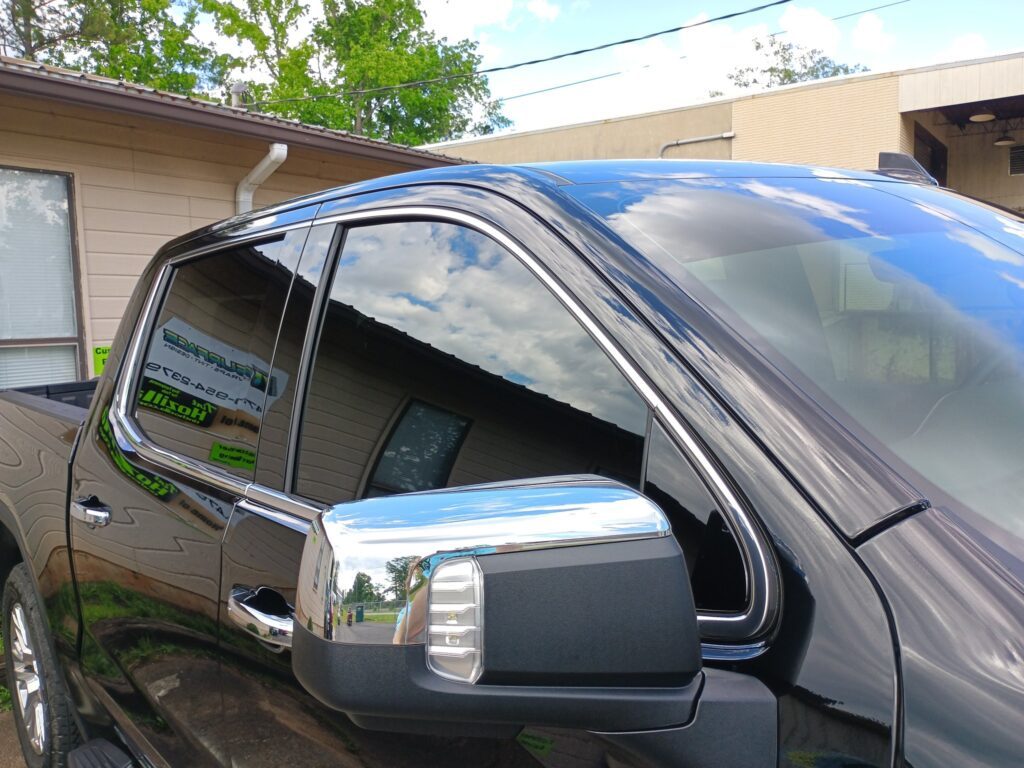
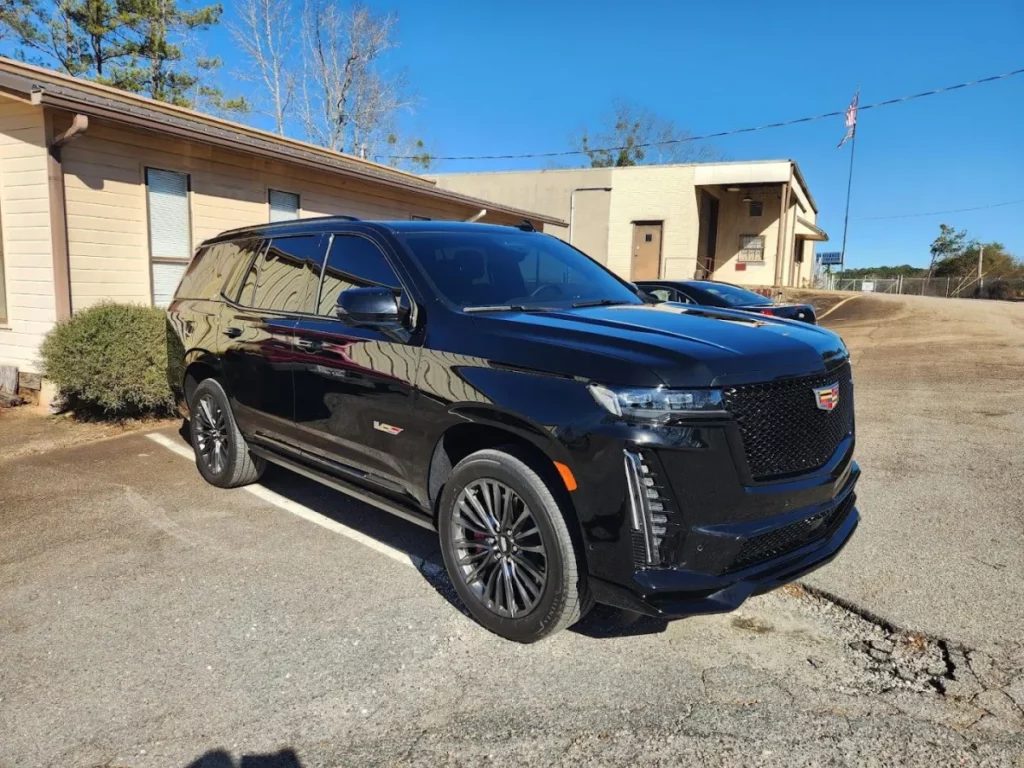
Window tinting in Forsyth, GA starts with the law: front side windows at 28% VLT MAX, rear glass at 15% VLT MAX, checked every install. Every piece of glass is measured twice, cut once, edges clean. Forsyth auto window tinting is champion's work — Jeff Welch, WFCT automotive champion 2006 and 2008.
Every job starts the same way: the glass is cleaned and read for scratches or chips before film ever touches it. Patterns are cut for your exact car, shrunk to the curve of the glass, and laid down wet so they can be set true. Every pane is squeegeed twice — once to set it, once to finish it.
The film is pro-grade, fitted to how you drive. Forsyth car window tinting means cooler cabins on the Highway 27 run, privacy inside the law. Ask the crew what fits your car — free quote. The result is window tinting Forsyth families hand down to their kids.
Before you leave, the crew walks the car with you — every edge, every corner — and shows you how the film settles over its first days in the Georgia sun. The shop runs Wednesday through Friday on South Park Street; folks from Bremen and Bowdon make the same drive.
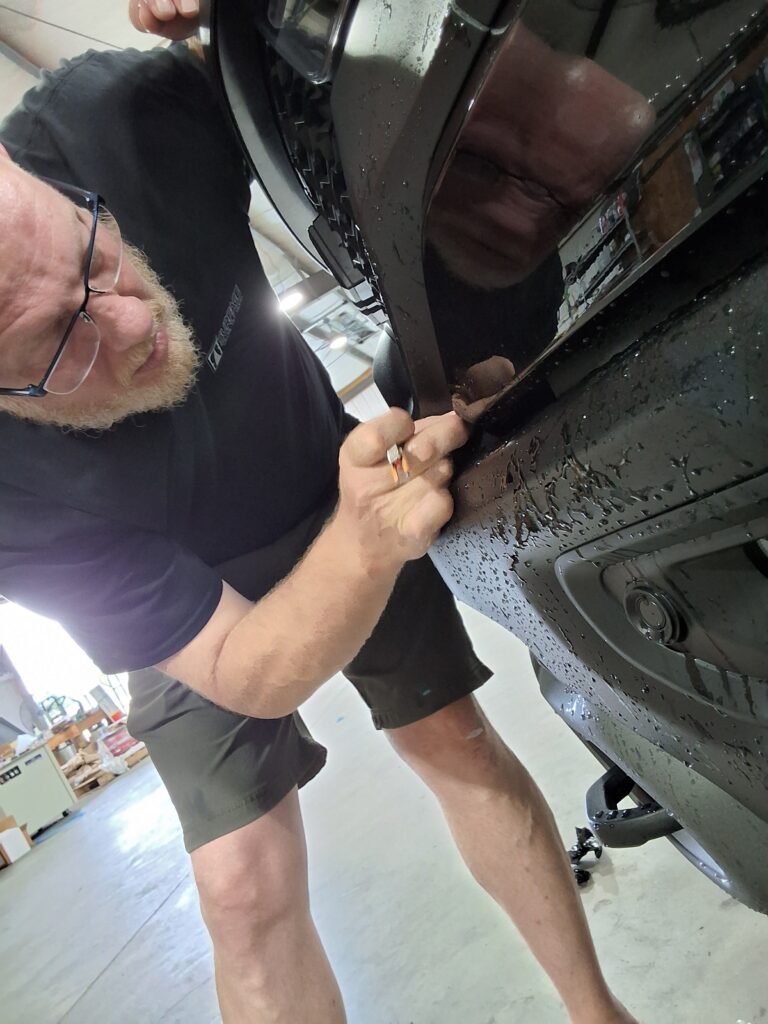
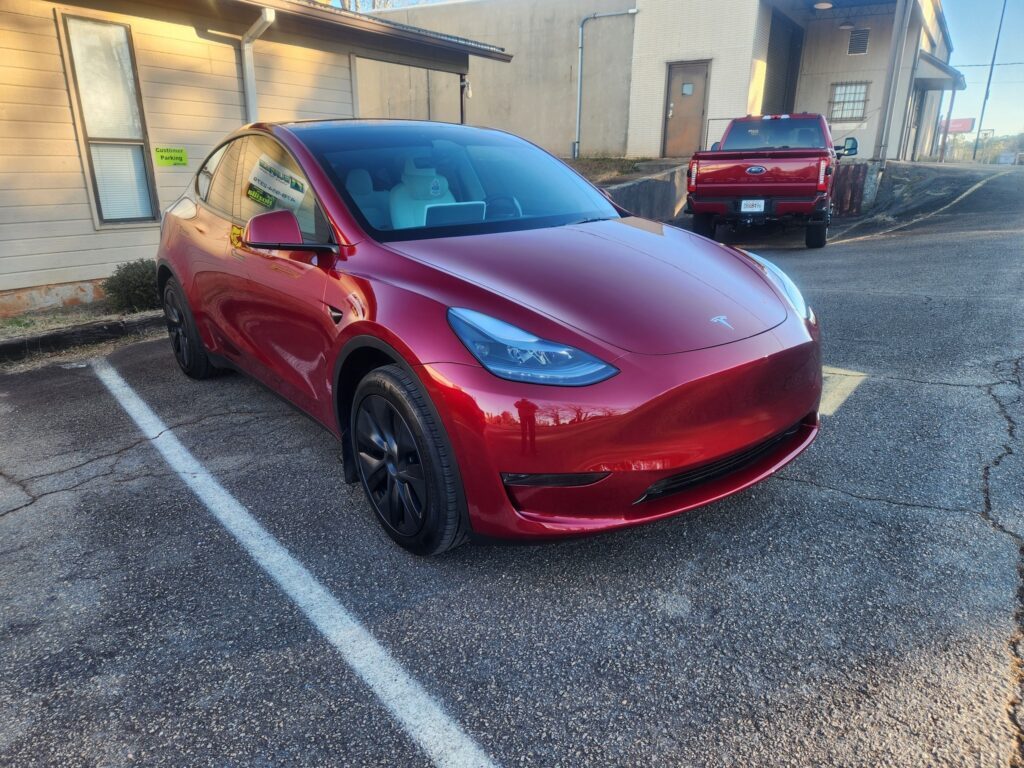
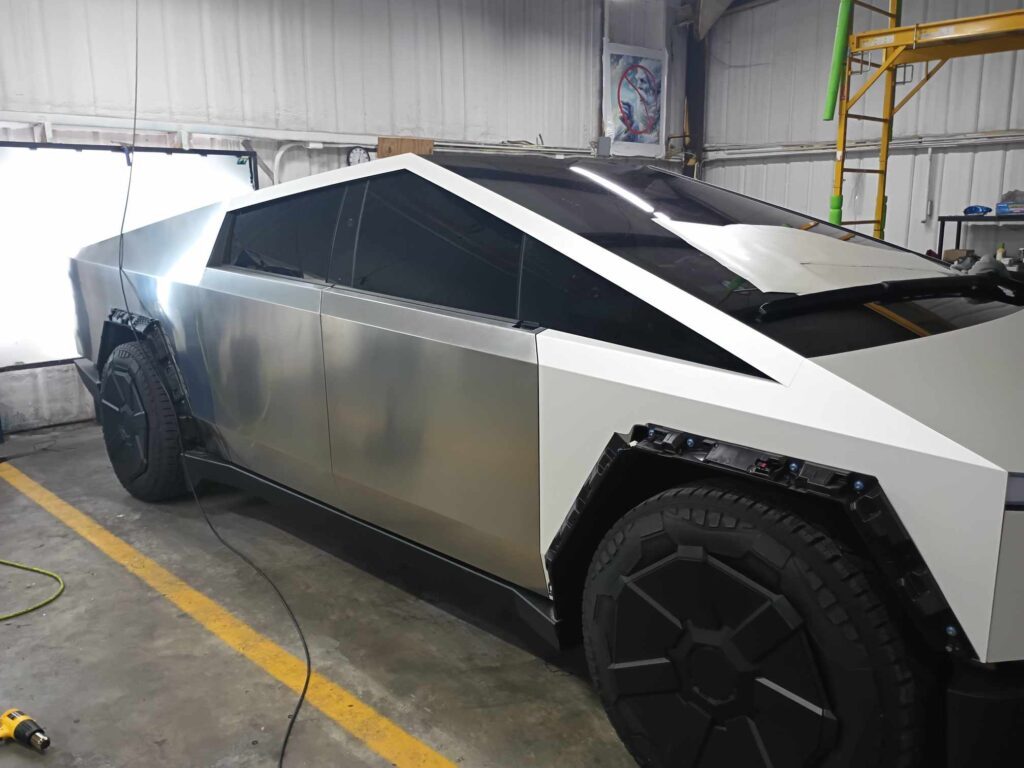
Tesla window tinting in Forsyth, GA is big-glass work: one sweeping roof, one huge rear pane, planned as one system. A Tesla tint in Forsyth turns back August heat, settles screen glare, helps block UV.
Big glass gets read before it gets touched: the roof's curve, the hatch's sweep, every seal and sensor at the edges. Covers go down over the dash and seats, and the film is shaped to the glass off the car first. Then it goes on in full panes — no patchwork, no pieced corners.
The rear pane makes the job — fitted in one clean piece, no seams, no defroster-line shortcuts. Tesla window tinting in Forsyth is quoted pane by pane. Every job starts with our crew walking the glass before anything is cut. Glass finished here looks factory-born, like it came that way. EV window tinting in Forsyth, GA: the hardest glass on the road, done right.
You feel it the first hot afternoon: the cabin loads in cooler, the wheel is touchable, and the screen reads clear at noon. Give the film a few days to cure before you drop the windows; after that, wash it like glass — soft cloth, nothing harsh.
Residential window tinting in Forsyth, GA takes back the rooms the sun took over. Home window tinting in Forsyth is architectural film, measured room by room: light kept, heat back, view preserved, rooms left easy to live in. The right film should disappear into the home — guests feel it, never see it.
A house job runs room by room, so life never stops for it. Furniture gets moved or covered, each pane is cleaned and cut to its own measure, and the film goes on wet so it can be set dead true. The room is handed back the same day — cleaner light, same view.
Behind it: Jeff Welch, WFCT architectural champion 2014. Home window tinting in Forsyth, GA starts with a walk-through — start with the worst room; the next follows. The film adds daytime privacy without drawn curtains. One house window tint in Forsyth, GA: cooler rooms, calmer light, glass that works.
West-facing glass is where it proves itself — the late sun that used to own the room now just visits. Floors and furniture keep their color longer in the softened light, and the porch stays part of the house instead of a greenhouse.
Commercial window tinting in Forsyth, GA is for the glass your business lives behind. Commercial window film in Forsyth manages the sun: heat back, light kept. The daily complaints end: washed-out screens, rooms that never cool. The right film gives your team rooms they can work in all summer.
It starts with a walk of the building: which glass bakes by ten, which screens wash out by noon, which rooms the air never catches up to. Every pane gets measured, the film gets matched to the problem in that room, and the work is staged so your doors never close for it.
Fitted around your hours. Office window tinting in Forsyth, GA never interrupts the workday. The standard is a champion's: Jeff Welch, WFCT architectural champion 2014. Walk your glass with the crew for a free quote on the work. Commercial window tinting in Forsyth, GA: fitted clean, finished on time, quoted free.
From the street, the glass reads even and clean — one business, one face, no patchwork of blinds. Inside, the light evens out and the rooms hold their temperature through the afternoon. Storefronts, offices, and restaurants across town run on the same fix.
UV window film in Forsyth, GA is for people who live in the light. UV protection window film in Forsyth can be clear and helps block up to 99% of UV rays. It cuts exposure before rays reach skin or seats.
The fitting is the same careful work as any shade job: glass cleaned down, film cut to the pane, laid on wet and worked flat until it disappears. The difference is the finish — when the squeegee passes end, the glass looks bare. No darkening, no color shift, nothing for a passenger to notice except the light feels easier.
Drivers treat window tint UV protection in Forsyth as work gear; parents book it for the back seat. The clear film changes nothing you see — no shade, no lost view. Ask the team which UV window film in Forsyth fits your glass. In the end, nothing looks different; everything about the light does.
Think of the hours your skin spends in the sun: the commute, the school run, the Saturday drive to the lake — most of it through car glass, most of it on the same arm. Film takes that daily dose down without changing a thing you see.
Window tinting training in Forsyth, GA is taught in a working shop, on real cars. Classes stay small: Jeff Welch teaches cutting, shrinking, doors and back glass, squeegee in hand from day one. Students learn how to tint windows in Forsyth the slow, correct way first.
A day in the class runs simple: watch it done right once, then do it yourself with Jeff at your shoulder. Mistakes happen on practice glass, where they belong, and get fixed on the spot — grip, angle, pressure, pace. Speed is taught last. Clean work is the whole point.
It leads to WFR certification, earned by hand — no written test. Window tint classes in Forsyth, GA run on the shop's working week — call (478) 954-2379 for the next opening.
Nobody passes on effort. A student's pane is judged like a paying job: if it would not roll out of this shop to a customer, it gets done again. That is the bar Jeff holds from the first morning — the same bar his own work has held for twenty years.
Graduates of window tinting training in Forsyth leave with real installs, not notes. You leave with a trade in your hands, learned the right way.
Here are the window tint limits that apply in Forsyth. Georgia sets these limits statewide — this is what they mean for drivers in Forsyth.
Georgia law as of July 1, 2026 — O.C.G.A. § 40-8-73.1, as amended by HB 1161. VLT is visible light transmission — the lower the number, the darker the film. Georgia allows a ±3% meter tolerance, and reflectance is capped at 20%. We install to legal limits and will walk you through your options before any film goes on.
Georgia's tint rule lives in one statute: O.C.G.A. § 40-8-73.1. Until July 1, 2026 it carried a single figure; HB 1161 (Ga. L. 2026, p. 917, Act 640) rewrote it into a front/rear split, effective July 1, 2026. The full band:
Front side windows — 28% VLT MAX. The front side and door windows sit at 28% VLT MAX (§ (b)(2)).
Rear side windows — 15% VLT MAX. The rear side and door windows sit at 15% VLT MAX (§ (b)(3)).
Rear windshield — 15% VLT MAX. The rear windshield carries the same 15% VLT MAX figure (§ (b)(3)).
Windshield — top strip only. No material or glazing that reduces light transmission may go on the windshield, except a transparent item — not red or amber in color — on its uppermost 6 inches (§§ (b)(1), (c)(4)). The law also allows the lower-corner sticker allowances of § (c)(2): a 7-inch square in the corner farthest from the driver and a 5-inch square nearest the driver.
Tolerance and reflectance. Each figure carries a ±3% statutory meter tolerance, written into the statute itself, and reflectance is capped at 20% on all regulated windows.
What VLT MAX means. VLT MAX is the darkest film the law allows: the number is the share of visible light that must still pass through the glass and film together — a lower number means a darker window. And the law measures film plus glass together: a film rated right at the limit, over factory glass that already passes only part of the light, can land past the line. That is the most common way Georgia drivers end up illegal without meaning to — and why we work to the finished-glass number.
Exemptions. The rear side windows and rear windshield of multipurpose passenger vehicles — built on a truck chassis or with special features for occasional off-road use, carrying ten people or fewer — sit outside the rear percentage rules, as do school, public and nonprofit buses and vans, limousines, and glass darkened before factory delivery. Also outside the rules: adjustable sun visors, carrier signage, and required government stickers, and law-enforcement, government, and licensed private detective and security vehicles in the course of business (§ (c)). Commercial motor vehicles follow 49 C.F.R. 393.60 (§ (f)).
Medical exemption (§ (d)). Georgia handles medical tint by Department of Public Safety exemption: DPS issues a limited exemption on application with a written attestation from a licensed physician or a certified optometrist. A shop cannot issue the exemption, and a prescription alone is not it — the DPS issuance is.
Installer liability and penalty. Installing non-compliant material is itself unlawful — the offense is not only the driver's (§ (e)). A violation of the statute is a misdemeanor (§ (h)).
Enforcement. Georgia's tint law creates no inspection, sticker, or compliance label, and the state runs no periodic safety inspection where tint gets measured. The figures are enforced on the road, at the stop — which is why the meter reading on your actual glass is the number that matters.
Statute: O.C.G.A. § 40-8-73.1, as amended by HB 1161, effective July 1, 2026. We install to legal limits and will walk you through your options before any film goes on.
Most of the time dyed film costs the least. It's dyed versus ceramic, with several other films in between — plus the size of the car, difficulty, and whether old film has to come off.
Your state sets it, and the front windows are always stricter than the rear. A good shop knows your state limits.
It depends on the quality of who made it, the quality of the film brand, and the shop behind it.
Most tint shops get it done in the same day. Yes, it can take just a couple hours to do it. But due to scheduling, figure on your car being at most shops for the whole day.
Keep them up three to five days while the film cures. A little haze at first is normal and clears on its own. Ask your actual tint shop to verify.
Ceramic rejects the most heat without going darker and never interferes with signals or electronics. Dyed is color only and fades first — generally you'd think it fades first, but that depends on the manufacturer and the quality at which it was built.
Yes — every film blocks the great majority of UV. Heat rejection is where they separate: ceramic rejects the most, dyed the least, and it comes down to the manufacturer and the quality of the film.
The percent is how much light gets through — lower means darker. Start with your state's legal limit, then pick by how much privacy and heat control you want.
In most states, only the strip at the top. Some states allow a clear heat-rejecting film on the full windshield. Your state's law decides.
No. Tint doesn't void the car's warranty — and the film itself carries its own manufacturer warranty from the shop.
The film is steamed and peeled, then the adhesive is cleaned off. The rear glass takes care around the defroster lines — that's the part a pro earns his money on.
It can — darker film cuts some night visibility, which is exactly why the front windows carry stricter legal limits. And if you're trying to go darker to remove more heat, you can get ceramic tint at a lighter shade and still get the same results, or similar results.
Georgia Window Tint sits in Forsyth — and drivers from every town we serve make the trip. Pick your town for its own page: